I was grateful for the opportunity to help start a restaurant and learn a completely different business from the ground up.
We had to choose systems for point of sale, payments, online ordering, kitchen operations, delivery, inventory, and accounting. I knew these categories existed, but I had never made those decisions with our own capital and an operating business depending on them.
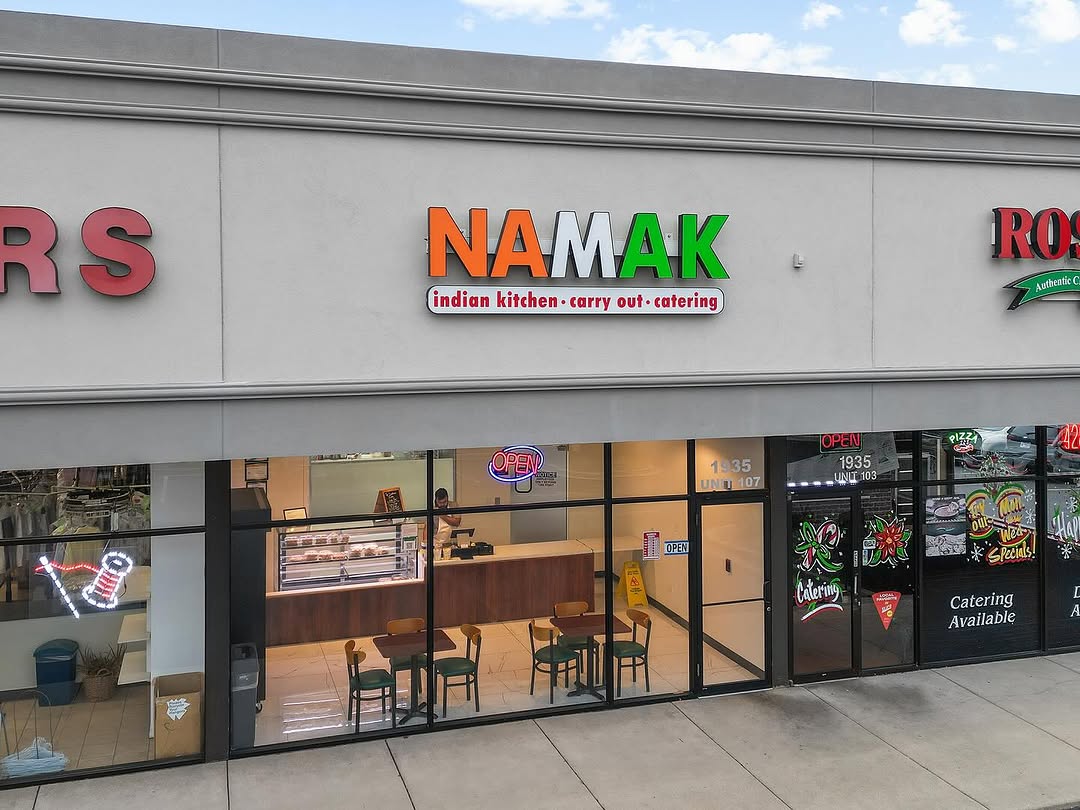


One thing that stood out was how similar the major point-of-sale systems had become. Toast, Square, and their competitors covered much of the same basic ground and competed hard to make it inexpensive to get started. Square offers point-of-sale software with no monthly fee, while Toast offers starter configurations with little or no upfront hardware cost under certain pricing arrangements.
Once a restaurant selects a system, the other products from that provider have a natural advantage. Payments are already connected. The menu and orders already live there. Employees know how to use it. Adding another service from the same company is easier than introducing a new vendor and making the systems work together.

The inexpensive software and hardware get the restaurant onto the platform. The provider then has more opportunities to earn money from payments and the products sold around it.
That experience made me wonder whether wealth technology is moving in the same direction: broader platforms, more software included in the initial package, and more of the economics coming from the financial products and services around it.
The wealth-tech stack will narrow
A wealth management firm today may use one system for portfolio accounting, another for CRM, another for financial planning, and several more for trading, billing, documents, alternative investments, compliance, and workflow.
That arrangement exists partly because each category was once difficult and expensive enough to support a separate software company. Portfolio accounting required its own engineering team and industry knowledge. So did planning, trading, CRM, and billing.
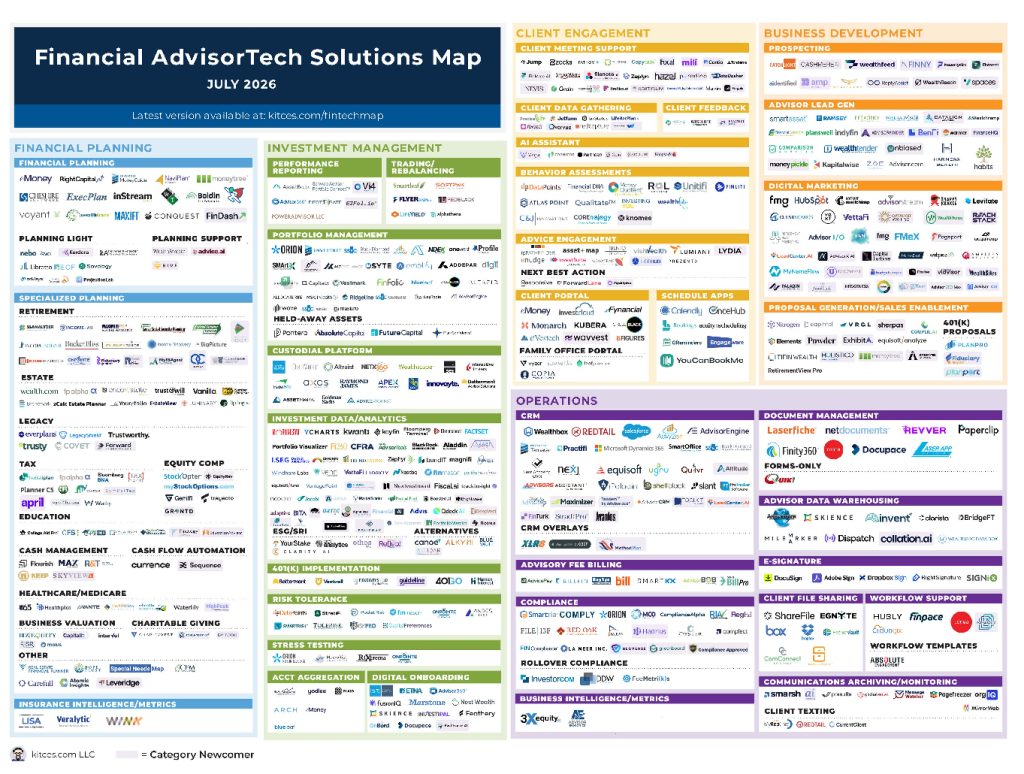
AI will make it faster and cheaper for established companies to add products next to the ones they already sell.
This does not mean one engineer can suddenly replace an entire team. AI may make meeting summaries, client portals, workflow tools, and document extraction easier to build. The underlying books and records remain difficult.
Portfolio data still has to be reconciled to custodians. Performance and advisory fees have to be calculated correctly. Tax lots have to be maintained. Transactions need the proper permissions and audit trail. A plausible answer is not good enough when the system is calculating a client’s return, fee, or realized gain.
A smaller team can now build and test more ideas than it could before. Engineers can write and review code faster, modernize older systems, create integrations, and learn adjacent categories with less time and capital.
The visible features will be copied first. Nearly every serious platform will soon have an AI assistant, meeting summaries, document extraction, workflow creation, reporting, and some version of a client portal.
Winning a new advisory firm will remain much harder. The vendor still has to earn the firm’s trust, convert years of data, train employees, and persuade people to change how they work.
Once a technology company has done all of that, selling more to the customer it already has is often easier than finding another one.
This is already happening. Orion combines advisor technology with outsourced investment management, a trade desk, custom indexing, and cash and credit offerings. Advyzon has expanded beyond its core platform into models, direct indexing, partnered trading, tax management, and OCIO services. Black Diamond now combines portfolio management, trading, reporting, CRM, alternative-investment servicing, and a TAMP within the broader SS&C business.
These companies started in different places, but all are looking for more ways to earn revenue from firms already using their technology.
I do not think every piece of the current stack disappears. I do think fewer firms will continue buying it one application at a time.
Smaller firms will buy more from one provider
For smaller and midsized RIAs, the appeal of a broader platform is straightforward.
The industry has talked for years about a single source of truth and straight-through processing. In plain English, a large withdrawal request, new account, or capital call should not have to be entered three times or disappear between systems. The CRM, trading system, billing records, and reporting engine should all be working from the same underlying information.
Most firms do not need the best individual product in every category. They need accurate information and systems that work together. They need a client request to reach the right person and not get lost. They need to know what remains open and what has been completed.
Firms will still buy a separate product when it solves a difficult problem much better.
Fi-Tek, for example, has built technology around the processing, books and records, custody, and reporting requirements of trust, brokerage, and wealth businesses. Pontera addresses a different but similarly specific problem: allowing advisors to manage workplace retirement accounts while maintaining security, supervision, and auditable records of advisor activity.
A broader platform may eventually place those capabilities behind its own interface. The advisor may stop logging into a separate application, but the difficult technology underneath will still be necessary.
Products that are only slightly better will have a harder time overcoming another contract, data conversion, integration, security review, and employee-training process. Many RIAs will choose one main platform and add specialized technology only where the difference is large enough to matter.
The software may not be where the money is
The point-of-sale comparison may also tell us something about how wealth software will be priced.
As the major platforms cover more of the same ground, companies with other sources of revenue will be able to include more software in the package.
Altruist offers the clearest example in wealth management. Advisors who custody assets there receive portfolio accounting, performance reporting, billing, rebalancing, and a client portal without a separate software charge. Altruist One adds automated tax-management tools and model-related benefits through a household-level subscription.
Because Altruist owns the custodial relationship, it has ways to make money beyond a conventional software subscription.

Wealth platforms will look for similar economics in investment management, cash, lending, insurance, and trading. A company earning revenue from those activities can bundle more software than one whose only revenue comes from licensing the application.
That does not mean the overall relationship becomes cheaper. The economics may simply move from a visible software fee into cash spreads, asset-based charges, transactions, lending, or products sold through the platform.
Advisors will need to understand not only what the software costs, but how the provider makes money. A bundled platform can be convenient while making the total economics harder to see.
There is also a cost to putting more of the firm onto one system. The more data, workflows, assets, and services an RIA places with one provider, the harder that provider becomes to replace.
A firm can remain independently owned while becoming operationally dependent on one technology company. Data portability, open APIs, business continuity, and the ability to leave will matter more as these platforms become more important.
Large firms will build more themselves
Large RIA aggregators and multi-family offices are unlikely to use an outside platform exactly as it comes.
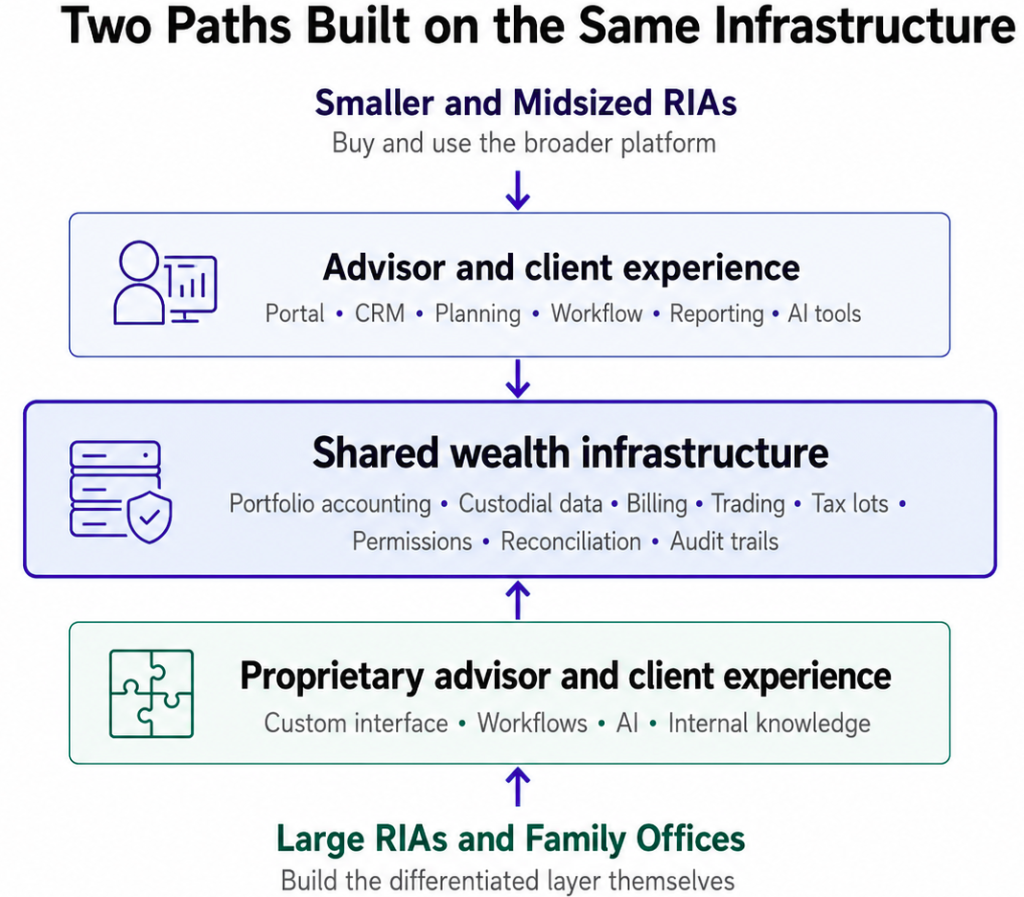
As engineering becomes more productive, these firms will have more reason to build their own advisor desktop, client interface, AI tools, service workflows, internal knowledge systems, and management reporting.
Those are the parts a large firm may want to make its own.
Some firms are already moving this way.
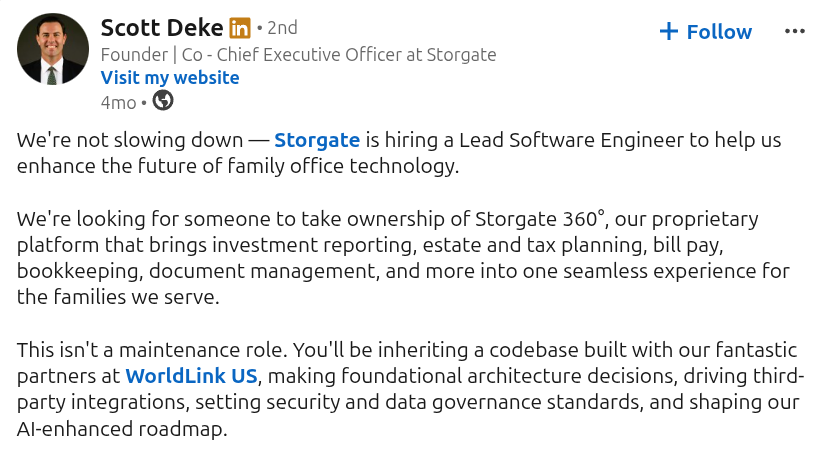

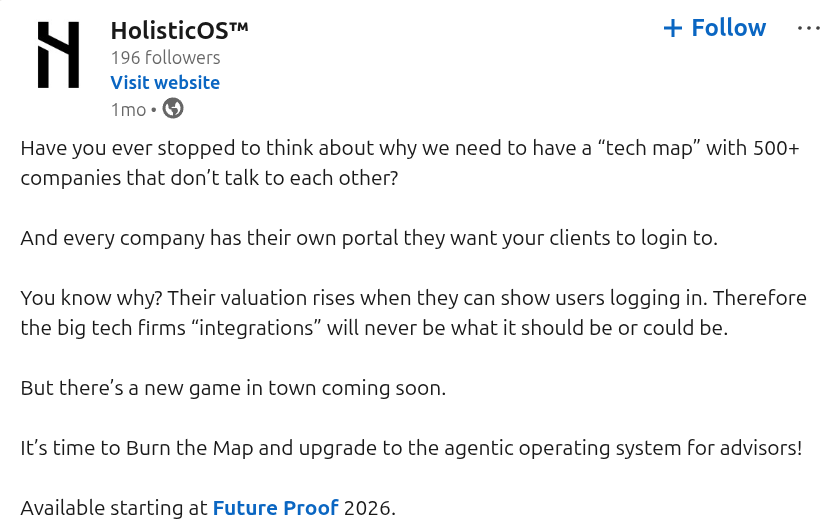
Storgate has developed its own integrated family-office environment across reporting, estate and tax planning, investments, and family-office services. Allposit began with software Michael Liberman built for his own family-office needs before developing it as a commercial product. HolisticOS is building a unified system across investments, tax planning and preparation, financial planning, communications, and compliance. There are many more I can keep listing.
I hear the same ambition from advisors who want to build more of the interface and workflows themselves while relying on outside providers for portfolio accounting, custodial data, trading, and other infrastructure.
Even a very large firm may have little reason to rebuild every custodian connection, performance engine, billing calculation, tax-lot record, permission structure, and audit trail.
Building also creates a permanent obligation. Software that begins as a differentiator can become another legacy system the firm has to maintain.
Large firms should probably build where the technology reflects something genuinely different about how they serve clients. Rebuilding portfolio accounting, billing, or trading infrastructure simply to call it proprietary is a harder case to make.
Smaller firms may buy nearly the whole platform. Larger firms may use the same underlying technology without showing the vendor’s name, building their own interface and workflows on top of it. Some wealth-tech companies will try to serve both.
What I learned at Mirador
Mirador taught me the other lesson.
During my time there, the company grew from serving a relatively small number of clients to several hundred relationships across single-family offices, multi-family offices, and large RIAs.
Technology was essential, but clients were not buying software alone.

They were relying on people to collect and review the data, notice when something was wrong, resolve exceptions, and make the information dependable. The technology allowed that work to scale, but capable operators were a large part of what made it valuable.
Good technology still needs an effective operator.
That makes me skeptical that wealth-tech platforms will differentiate themselves through features alone. Once most platforms offer similar reporting, CRM, billing, workflow, documents, planning, and AI capabilities, implementation, reliability, and service will matter more.
Payroll and cybersecurity have followed versions of this path. Payroll providers expanded from calculation software into tax filings, benefits, compliance, and broader HR support. Cybersecurity providers moved from producing alerts to managed services that investigate and respond to threats.
In both cases, customers paid to hand off part of the responsibility rather than simply gain access to another tool.
Wealth tech may move in the same direction, but the provider should not try to do everything. Personal judgment, family governance, legal work, and the advisor relationship are difficult to standardize and should remain close to the client.
The best opportunities are repetitive, data-heavy tasks where software can handle most of the routine work and experienced operators step in when judgment is needed. That is how service can grow without headcount rising at the same rate.
More independent firms and more consolidation
Wealth management is creating more independent firms while concentrating more assets inside the largest ones.
RIA acquisition activity remains high. DeVoe counted 93 transactions in the first quarter of 2026 and 167 across the first half of the year.
At the same time, the number of SEC-registered investment advisers reached a record 16,544 in 2025, an increase of 674 firms from the prior year.
Better infrastructure makes it easier to run a focused independent firm without building a large internal organization. Cheaper engineering gives the largest firms more ability to build proprietary tools, integrate acquired businesses, and spread the cost of specialists and technology across a larger base.
The pressure may be greatest on firms that have accumulated the costs and complexity of a larger organization without enough scale to build distinctive capabilities or spread those costs across a broad client base.
That leaves aggregators with a harder question: what does joining them provide that an independent firm cannot buy elsewhere?
Access to good software and centralized operations becomes less persuasive when smaller firms can purchase both. Larger organizations will need to show that their scale produces something an independent firm cannot easily buy: growth, connected expertise, better execution, succession support, or meaningfully lower costs.
Wealth-tech companies face the same problem. A long feature list will matter less once the major platforms cover most of the same ground. Reliable financial records, difficult integrations, implementation knowledge, existing customer relationships, and the ability to operate the system well will be harder to reproduce.
From software to infrastructure
I do not expect one platform to serve every wealth firm in the same way.
Smaller RIAs will buy increasingly complete systems. Large aggregators and family offices will build more of their own advisor and client tools while relying on outside accounting, data, trading, and custody infrastructure. Specialized wealth-tech products will remain where the underlying problem is genuinely difficult.
Some technology companies will make more money from custody, investment management, cash, lending, insurance, or trading. Others will take responsibility for repeatable work performed through their systems.
Helping start a restaurant showed me how inexpensive software and hardware can lead to a much larger economic relationship.
Mirador showed me that good technology still depends on people who know how to operate it and take responsibility when something goes wrong.
That is what I mean by wealth infrastructure: the financial records, custodial and trading connections, products, operating knowledge, and service that allow a wealth firm to run without building everything itself.
A smaller firm may no longer need to join a large institution to gain access to sophisticated infrastructure. It will still have to decide how much of its business it is comfortable placing in the hands of one platform.
That is where I think wealth tech is headed. The most important platforms will no longer be judged mainly by the software their customers can see. They will be judged by how much of the firm can reliably run through them—and how difficult it would be for the firm to operate without them.
That is the shift from wealth software to wealth infrastructure.